The common misconception is that a crypto wallet is “secure” simply because its private key has never been exposed. That is only one layer of security. In DeFi, a wallet can remain perfectly uncompromised while a token approval, a misleading signature, or a poorly timed transaction gives another contract meaningful control over its assets. Security is not just about protecting the key; it is also about controlling what the key authorizes.
For US-based DeFi users, this matters because the practical cost of good security is often paid in network fees, time, and attention. Revoke every approval immediately and you may waste gas. Leave approvals untouched forever and you increase the number of permissions that could become dangerous if a contract is upgraded, exploited, or interacted with through a compromised interface. The right answer is not maximal clicking. It is a system for deciding which permissions are necessary, how long they should last, and when the cost of changing them is justified.
Token approvals are permissions, not transfers
When a user swaps, lends, stakes, or deposits an ERC-20 token, the application often needs permission to move that token on the user’s behalf. This is commonly done through an approve transaction. The token contract records an allowance: a specific spender address may transfer up to a specified amount from the user’s balance. The important distinction is that approval and transfer are separate events. Approving a contract does not necessarily move tokens immediately, but it creates a capability that may be used later.
That capability explains why approval management is a wallet-security issue. A legitimate decentralized exchange may require an allowance so that a later swap can proceed. Yet the same design means a user should know which address is receiving permission, which asset is covered, and how much can be moved. An unlimited allowance is convenient because the user may not need to approve again for every trade. It is also broader than the minimum permission required for one transaction. Convenience and exposure rise together.
There is a second misconception worth correcting: revoking an approval does not undo a transfer that already happened. It changes the allowance going forward. If a malicious contract has already used the permission, revocation cannot retrieve the funds. Approval controls are therefore preventive and residual-risk tools, not a substitute for inspecting a transaction before signing it.
For many users, the most useful mental model is a “capability ledger.” Your wallet balance tells you what you own today; your approvals tell you what external contracts may be able to move tomorrow. A security review that checks only the visible balance is incomplete. The approval list, contract identity, requested amount, and transaction simulation all belong to the same decision.
Three approval strategies, compared
Unlimited approvals: efficient but expansive
Unlimited or very large approvals reduce repeated transactions. For a user who interacts frequently with a well-established protocol, that can mean fewer interruptions and lower cumulative gas costs. The strategy is operationally simple: approve once, then transact when needed.
The sacrifice is scope. If the approved spender is later exploited, behaves unexpectedly, or is confused with a similarly named address, the remaining allowance can become relevant. This does not mean every unlimited approval is automatically unsafe; it means the user is accepting a larger blast radius in exchange for convenience. That trade-off may be tolerable for a small, actively monitored hot-wallet balance, but less appropriate for a treasury or long-term holdings.
Exact or limited approvals: narrower permissions, more friction
An exact approval, or an allowance close to the amount needed, limits what the spender can draw under that permission. This follows the principle of least privilege used in other security systems: give an application only the authority required for the task. If the transaction is a one-time interaction, a narrow allowance can make the residual risk smaller.
The drawback is that the user may need another approval later. On a congested Ethereum mainnet block, that extra transaction can cost more than the security benefit is worth for a low-value trade. Exact approvals also do not protect against a user approving the wrong spender or signing a malicious transaction. Narrow scope reduces one risk; it does not validate the entire interaction.
Signature-based approvals: fewer transactions, more signing discipline
Some token systems and applications support off-chain signatures that authorize spending without an immediate on-chain approval transaction. These mechanisms can reduce the number of on-chain actions and sometimes improve the user experience. They can also make approval state less obvious to users who assume that “nothing on-chain happened” means no permission was granted.
Signature-based authorization introduces a different failure mode: the user may sign a message whose consequences are not obvious from the wallet prompt. The security question shifts from “What allowance is already recorded?” to “What authority does this signature create, for which asset, spender, amount, and deadline?” Expiration and domain separation can help, but they are implementation details, not guarantees. A wallet that explains signing requests clearly is valuable, but the user still has to read the authority being granted.
How a safer approval workflow works
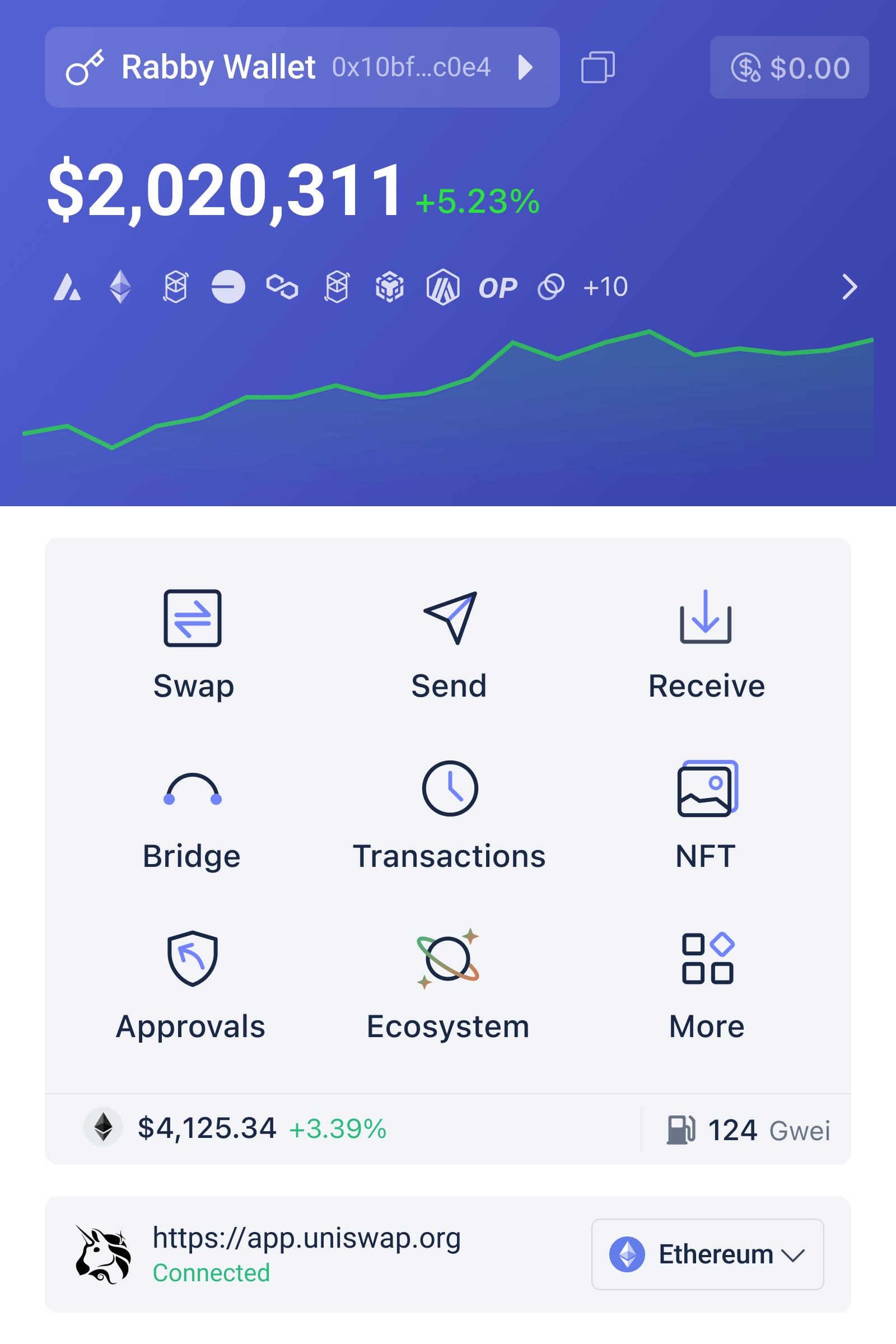
Before installing any browser wallet extension, verify that the download source is the intended project site and that the browser prompt is consistent with the extension you meant to add. For readers evaluating the rabby extension download, the practical objective should be more than obtaining a wallet interface: use a wallet that helps surface transaction simulations, contract warnings, and approval context, then confirm important details independently.
During a transaction, separate four questions that are often compressed into one click. What asset is being spent? Which contract or address receives authority? Is the requested amount limited or effectively unlimited? What will the resulting transaction do if the application behaves exactly as described? The fourth question is especially important because a familiar token symbol does not prove that the destination contract is legitimate.
A transaction simulation can improve understanding by showing expected balance changes and likely outcomes before signing. But simulation is not an oracle. It depends on the current state of the chain and on how the wallet or service models contract behavior. It may not capture every future condition, off-chain compromise, governance change, or deceptive interface element. Treat simulation as a useful inspection layer, not a warranty.
For a practical US user, a reasonable routine is to divide assets by purpose. A hot wallet used for routine swaps can hold only the amount needed for active strategies. A separate wallet can hold longer-term assets and interact rarely. This is not perfect compartmentalization—users can still sign a bad transaction from either wallet—but it limits the consequences of a mistake. The key insight is that wallet separation changes potential loss, while approval review changes permissions. They solve related but different problems.
Gas optimization: cheaper is not always safer
Gas is the fee paid to have a transaction processed on a blockchain. On Ethereum, the user generally pays in ETH; on other networks, the fee asset and fee market differ. An approval, a revoke, and the underlying DeFi action can each be separate transactions, so security maintenance has a measurable cost. That cost creates a temptation to postpone revocations indefinitely.
The best gas decision depends on risk, not just price. Revoking a stale allowance to a low-value token on a quiet, inexpensive network may be sensible immediately. Revoking every allowance during a period of high mainnet demand may be economically irrational if the wallet contains little exposure and the spender is not connected to an active strategy. Conversely, delaying a revocation because fees are inconvenient becomes harder to defend when the approval concerns a valuable asset, an unfamiliar contract, or a protocol that has changed materially.
Users can often reduce cost by consolidating non-urgent maintenance, choosing lower-fee periods when the transaction is not time-sensitive, and avoiding unnecessary on-chain actions. Layer-2 networks may offer lower transaction costs, but a lower fee does not make a risky contract trustworthy. Bridges, cross-chain deployments, and differing token contracts add their own complexity. An approval on one network is not automatically an approval on another, yet the user’s overall portfolio risk may span both.
Batching can also be attractive when supported, because multiple related actions may be submitted through one user flow. But batching does not magically eliminate execution cost, and it can make the transaction harder to inspect. A single complex transaction may be cheaper or more convenient while presenting a larger comprehension burden. The useful question is not “How many clicks can I remove?” but “Can I still explain every authority and asset movement in this bundle?”
A decision framework for active DeFi users
Approval management becomes easier when assessed on three axes: exposure, trust, and urgency. Exposure includes the value and type of asset that could be moved. Trust includes the contract’s provenance, the application’s operational history, and whether the address matches what the wallet and interface display. Urgency asks whether the permission is needed now or can wait for a cheaper and calmer transaction window.
High exposure, uncertain trust, and low urgency is a strong case for pausing rather than signing. High exposure, established use, and clear necessity may justify a limited approval rather than an unlimited one. Low exposure and frequent use may justify convenience, especially in a wallet deliberately funded for experimentation. None of these categories is permanent. A protocol upgrade, a new front end, a change in wallet balance, or a suspicious signature request can move an interaction into a different risk class.
Watch next for better permission standards, clearer wallet explanations, and application designs that request narrower authority by default. If those tools become easier to use, the trade-off between security and gas may soften. The open problem is that permission systems remain technically complex and fragmented across tokens, chains, and protocols. Until interfaces make authority as legible as a bank transfer, users should assume that a successful transaction is not necessarily a safe transaction.
Frequently asked questions
Should I revoke every token approval?
Not automatically. Review approvals according to the asset value, spender identity, allowance size, and whether the permission is still needed. Revoking costs gas and does not reverse transfers that already occurred. It is most compelling when an allowance is stale, unusually broad, tied to an unfamiliar contract, or no longer justified by an active strategy.
Is an unlimited approval always dangerous?
No. It is a broader permission, which increases potential exposure if the spender is compromised or misused, but the actual risk also depends on the contract, the wallet balance, and the user’s monitoring practices. Unlimited approval is best understood as a convenience-risk trade-off, not as proof of fraud or proof of safety.
Can a wallet extension guarantee that a DeFi transaction is safe?
No wallet can guarantee the future behavior of a smart contract or recover funds after a user authorizes a harmful action. A capable extension can make transaction effects, warnings, and permissions easier to inspect. The final defense remains deliberate signing, limited exposure, and separating long-term holdings from routine DeFi activity.
The sharper security habit is not to fear every approval or chase the lowest possible gas price. It is to treat approvals as living permissions with a cost, a purpose, and an expiration point—even when the blockchain does not enforce that expiration for you. That perspective turns wallet security from a one-time installation decision into an ongoing form of risk management.